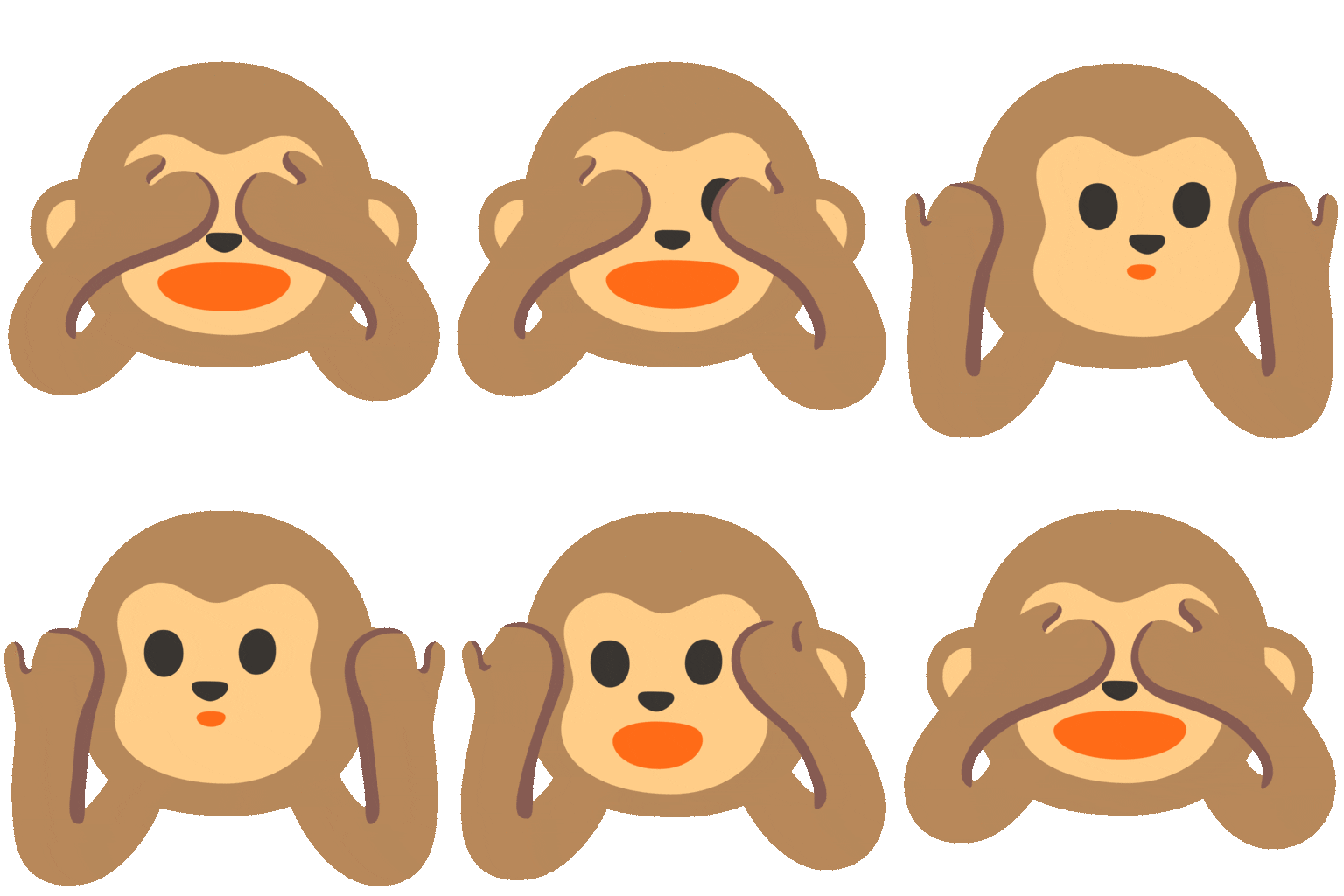
The "Three Wise Monkeys" represent a Japanese pictorial maxim, embodying the proverb "see no evil, hear no evil, speak no evil." These monkeys are Mizaru, covering his eyes; Kikazaru, covering his ears; and Iwazaru, covering his mouth. The proverb is often interpreted as a call to avoid exposure to evil influences or to ignore wrongdoing. The monkeys are a popular visual motif found in various forms of art, decoration, and now, digital communication. Using these emojis can convey a range of meanings, from playful avoidance to serious commentary on societal issues. Understanding the cultural context is crucial for using these emojis effectively and avoiding misinterpretations. They can be used individually or together to express different aspects of the proverb.
16+Emoji
8Messages
5Tips
⚡
Quick Copy
Copy most popular emojis with one click
🙈
See-No-Evil Monkey
🙉
Hear-No-Evil Monkey
🙊
Speak-No-Evil Monkey
🐒
Monkey
🙅
Person Gesturing No
🤫
Shushing Face
😶
Face Without Mouth
🤐
Zipper-Mouth Face
🧪 Emoji Mashups (Emoji Kitchen)
Fun mashups created by combining Three Wise Monkeys emojis with Emoji Kitchen. Download and use them freely.
Help grow the Three Wise Monkeys collection! Suggest emojis or symbols you think are missing and contribute to the community.
💡 Missing an emoji/symbol?
📖
Meaning & Usage
🙈
See-No-Evil Monkey
Represents the act of not seeing evil. It can be used to express shock, embarrassment, or a desire to avoid something unpleasant. On some platforms, the monkey's expression appears more surprised or playful than others.
🙉
Hear-No-Evil Monkey
Represents the act of not hearing evil. It can be used to indicate that you're ignoring something, or that you don't want to hear about something. The design varies across platforms, with some versions showing the monkey with a more determined expression.
🙊
Speak-No-Evil Monkey
Represents the act of not speaking evil. It can be used to suggest discretion, secrecy, or a refusal to participate in gossip. The emoji's expression can range from mischievous to serious depending on the platform.
🐒
Monkey
While not directly one of the three wise monkeys, it is the base emoji for all three. It can be used in conjunction with other emojis to create your own variations or to simply represent monkeys in general.
🙅
Person Gesturing No
Can be used as a substitute for 'see no evil' or 'hear no evil' when the monkey emojis are not appropriate or available. It conveys a general sense of refusal or denial.
🤫
Shushing Face
Can be used as a substitute for 'speak no evil', representing silence or a request for silence. It's often used to indicate a secret or something that should not be discussed.
📱
Platform Appearances
🙈 See-No-Evil Monkey
Google NotoApache 2.0
Twitter/XCC-BY 4.0
Noto AnimatedApache 2.0
Fluent 3DMIT
OpenMojiCC BY-SA 4.0
🙉 Hear-No-Evil Monkey
Google NotoApache 2.0
Twitter/XCC-BY 4.0
Noto AnimatedApache 2.0
Fluent 3DMIT
OpenMojiCC BY-SA 4.0
🙊 Speak-No-Evil Monkey
Google NotoApache 2.0
Twitter/XCC-BY 4.0
Noto AnimatedApache 2.0
Fluent 3DMIT
OpenMojiCC BY-SA 4.0
🐒 Monkey
Google NotoApache 2.0
Twitter/XCC-BY 4.0
Noto AnimatedApache 2.0
Fluent 3DMIT
OpenMojiCC BY-SA 4.0
🙅 Person Gesturing No
Google NotoApache 2.0
Twitter/XCC-BY 4.0
Fluent 3DMIT
OpenMojiCC BY-SA 4.0
🤫 Shushing Face
Google NotoApache 2.0
Twitter/XCC-BY 4.0
Noto AnimatedApache 2.0
Fluent 3DMIT
OpenMojiCC BY-SA 4.0
ℹ️ All images shown are from open-licensed sources (Apache 2.0, MIT, CC-BY 4.0, CC BY-SA 4.0) and are free to use.
💬
Ready Messages
Copy and share
I'm just going to pretend I didn't see that 🙈🙉🙊
Let's all agree to see no evil, hear no evil, and speak no evil. 🙈🙉🙊
I'm trying to avoid all the drama today. 🙈🙉🙊
I'm not involved! 🙈🙉🙊
🤐 I promised I wouldn't say anything. 🙊
Did you hear about...? 🙉 I don't want to know!
I'm staying out of this conversation. 🙈🙊
Let's keep this between us 🤫🙊
🎨
Related Emojis
🙈
See-No-Evil
🙉
Hear-No-Evil
🙊
Speak-No-Evil
🐒
Monkey
🙅
No Gesture
😶
No Mouth
🤫
Shushing
🤐
Zipper
💡
Usage Tips
🎯
Context is Key
Consider your audience and the situation before using these emojis. They can be interpreted differently depending on the context.
🎯
Platform Variations
Be aware that the appearance of these emojis can vary across different platforms (Apple, Google, Samsung, etc.). Test how they look on different devices to ensure your message is conveyed as intended.
🎯
Combining Emojis
Use these emojis in combination with other emojis to add nuance and clarity to your message. For example, adding a 😂 emoji can indicate that you're being playful.
🎯
Avoid Misinterpretation
While often used humorously, be mindful that the 'see no evil, hear no evil, speak no evil' concept can be sensitive in certain situations. Avoid using them in contexts where they might be seen as dismissive or insensitive.
🎯
Use Sparingly
Overusing these emojis can make your message seem insincere or childish. Use them sparingly and thoughtfully to maximize their impact.
🔗
Similar Combinations
Discover more emoji combinations related to Three Wise Monkeys