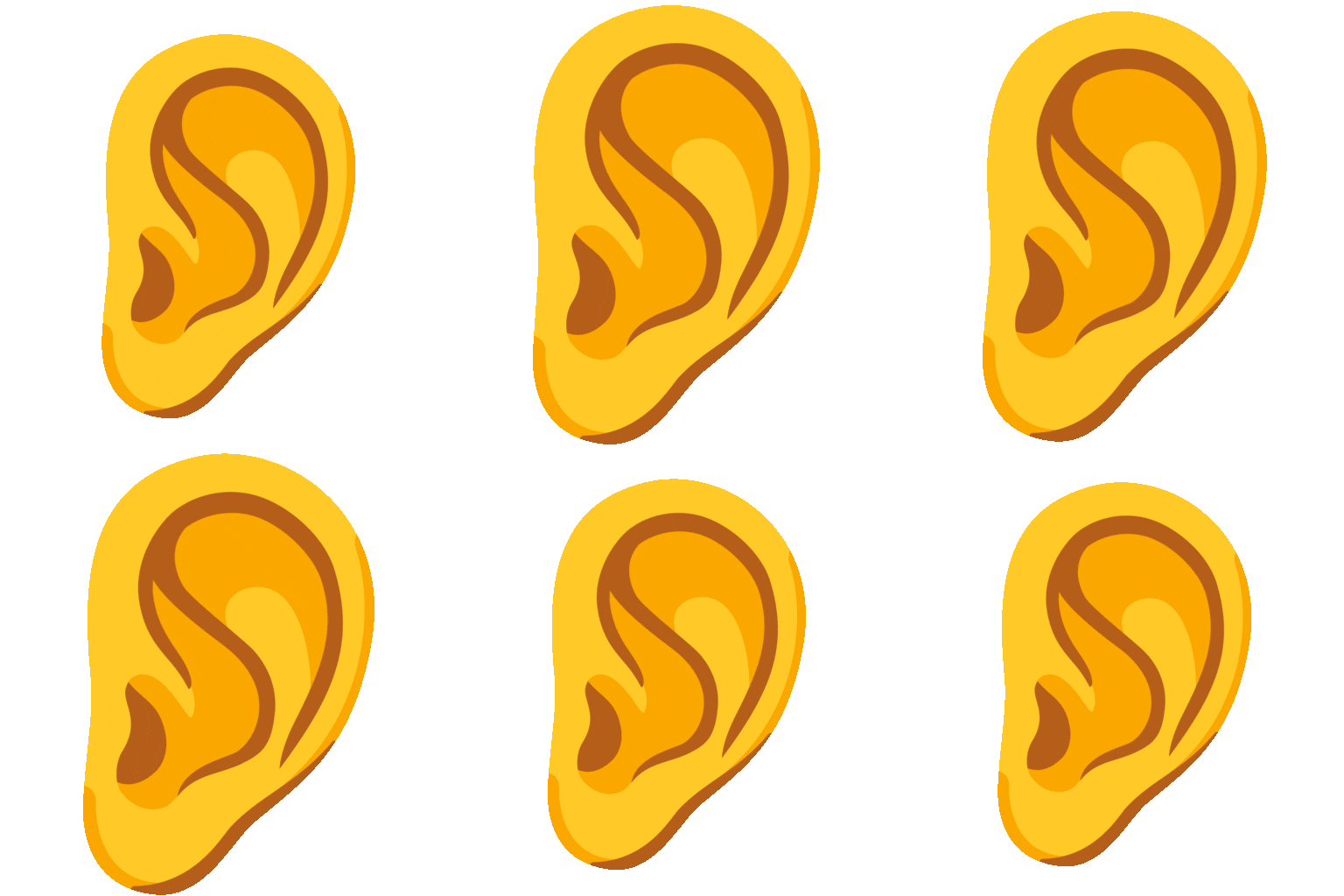
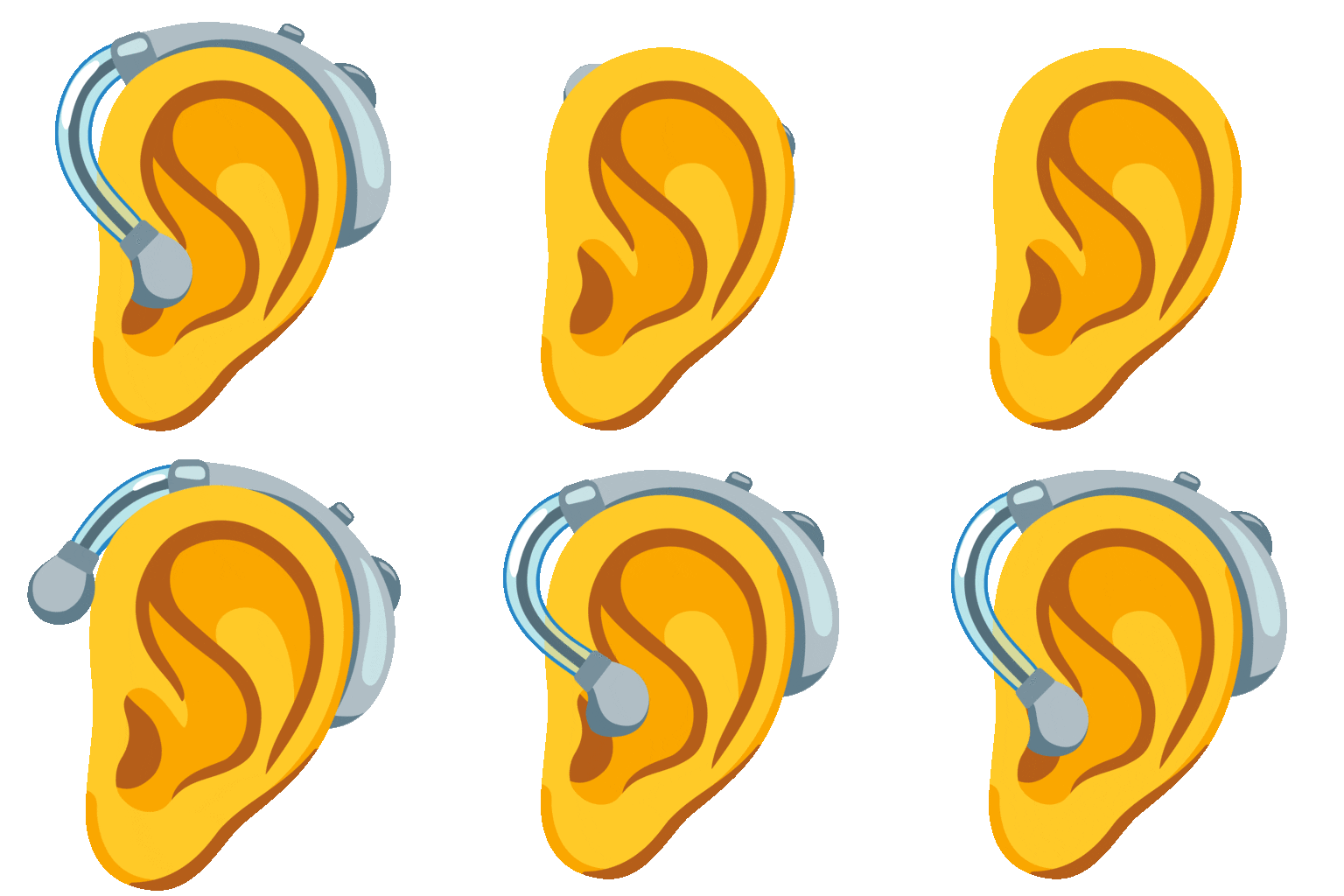
Emojis related to hearing encompass a range of symbols that represent the act of listening, deafness, sound, and related concepts. These emojis can be used to express various ideas, from enjoying music and attending concerts to discussing hearing impairments and advocating for accessibility. The ear emoji 👂 is the most direct representation of hearing, while musical notes 🎵🎶 can symbolize the sounds we hear. The deaf person emoji 🧏 and the ear with a hearing aid 🦻 are important for representing deafness and hearing assistance. Using these emojis thoughtfully can help promote inclusivity and understanding around hearing-related topics.
Beyond the literal, emojis can also convey the quality of hearing, such as loud sounds (📢🔊) or quiet environments (🤫). They can be used to express emotions associated with hearing, like excitement at a concert (🤩🥳) or frustration with noise (😫😠). When discussing hearing loss or accessibility, it's crucial to use respectful and inclusive language alongside the relevant emojis. Consider the context of your message and the potential impact on your audience. By using a combination of emojis, you can effectively communicate about hearing in a visually engaging and sensitive manner. Remember to check how emojis render across different platforms, as slight variations in design can affect the overall message.
17+Emoji
8Messages
5Tips
⚡
Quick Copy
Copy most popular emojis with one click
👂
Ear
🦻
Ear with Hearing Aid
🧏
Deaf Person
🎵
Musical Note
🎶
Musical Notes
📢
Loudspeaker
🔊
Volume
🤫
Shushing Face
🎧
Headphones
🧪 Emoji Mashups (Emoji Kitchen)
Fun mashups created by combining Hearing emojis with Emoji Kitchen. Download and use them freely.
Help grow the Hearing collection! Suggest emojis or symbols you think are missing and contribute to the community.
💡 Missing an emoji/symbol?
📖
Meaning & Usage
👂
Ear Emoji
Represents the sense of hearing, listening, or eavesdropping. It can be used to indicate that someone is paying attention or to ask someone to listen. On some platforms, the ear is depicted with different skin tones.
🦻
Ear with Hearing Aid Emoji
Represents hearing aids and is used to promote inclusivity for people with hearing loss. It signifies assistive listening devices and can be used in discussions about accessibility and deafness. This emoji is relatively new and may not be supported on all older devices.
🧏
Deaf Person Emoji
Represents deafness and the deaf community. It's used to promote awareness and inclusion for individuals who are deaf or hard of hearing. This emoji can be used in discussions about sign language and deaf culture.
🎵
Musical Note Emoji
Represents music, songs, and melodies. It can be used to express enjoyment of music or to indicate that something is musical. The design varies slightly across platforms, but the meaning remains consistent.
🎶
Musical Notes Emoji
Similar to the single musical note, this emoji represents music and melodies, often indicating a more lively or upbeat sound. It can also be used to express a love for music or to describe a musical performance.
📢
Loudspeaker Emoji
Represents a loudspeaker or megaphone, symbolizing loud announcements or public speaking. It can also indicate that someone is being very vocal or opinionated. The design is generally consistent across platforms.
🔊
Volume Emoji
Represents the volume level of sound. It can be used to indicate that something is loud or that the volume needs to be adjusted. The number of sound waves varies slightly across platforms.
📱
Platform Appearances
👂 Ear
Google NotoApache 2.0
Twitter/XCC-BY 4.0
Noto AnimatedApache 2.0
Fluent 3DMIT
OpenMojiCC BY-SA 4.0
🦻 Ear with Hearing Aid
Google NotoApache 2.0
Twitter/XCC-BY 4.0
Noto AnimatedApache 2.0
Fluent 3DMIT
OpenMojiCC BY-SA 4.0
🧏 Deaf Person
Google NotoApache 2.0
Twitter/XCC-BY 4.0
Fluent 3DMIT
OpenMojiCC BY-SA 4.0
🎵 Musical Note
Google NotoApache 2.0
Twitter/XCC-BY 4.0
Fluent 3DMIT
OpenMojiCC BY-SA 4.0
🎶 Musical Notes
Google NotoApache 2.0
Twitter/XCC-BY 4.0
Noto AnimatedApache 2.0
Fluent 3DMIT
OpenMojiCC BY-SA 4.0
📢 Loudspeaker
Google NotoApache 2.0
Twitter/XCC-BY 4.0
OpenMojiCC BY-SA 4.0
ℹ️ All images shown are from open-licensed sources (Apache 2.0, MIT, CC-BY 4.0, CC BY-SA 4.0) and are free to use.
💬
Ready Messages
Copy and share
Just got new headphones! 🎧 The sound quality is amazing! 🤩
Going to a concert tonight! 🎶 Can't wait to hear my favorite band! 🤘
Please speak up, I'm having trouble hearing you. 👂
Promoting accessibility for everyone, including those who are deaf or hard of hearing. 🧏🦻
This music is so loud! 📢 Can we turn it down a bit? 🤫
Learning sign language to better communicate with the deaf community. 🤟
Enjoying some quiet time with my favorite album. 😌🎵
The new hearing aid technology is incredible! 🦻
🎨
Related Emojis
👂
Ears
🦻
Hearing Aids
🧏
Deafness
🎵
Music
📢
Sound
🤫
Silence
🎤
Microphones
🎧
Headphones
💡
Usage Tips
🎯
Context is Key
Consider the context of your message when using hearing-related emojis. Ensure that your use is respectful and appropriate for the situation.
🎯
Platform Variations
Be aware that emoji designs can vary across different platforms (Apple, Google, Samsung, etc.). Check how your emojis appear on different devices to ensure your message is clear.
🎯
Inclusivity Matters
When discussing deafness or hearing loss, use inclusive language and emojis like 🧏 and 🦻 to promote awareness and understanding.
🎯
Combine Emojis
Combine hearing-related emojis with other emojis to express more complex ideas and emotions. For example, use 👂 with 🤔 to indicate someone is thinking about what they heard.
🎯
Avoid Misinterpretation
Be mindful of potential misinterpretations. Some emojis, like 🤫 (shushing face), can have different connotations depending on the context. Use them carefully.
🔗
Similar Combinations
Discover more emoji combinations related to Hearing