Warning Sign
Indicates a potential hazard or something that requires caution. In the context of misinformation, it can signal that the information presented should be approached with skepticism and verified.
Misinformation, the spread of false or inaccurate information, has become a pervasive issue in the digital age. Emojis can play a subtle yet powerful role in amplifying or debunking false narratives. They can be used sarcastically to highlight the absurdity of a claim, or to add emotional weight to a factual statement. Understanding how emojis are used in the context of misinformation is crucial for navigating the online landscape responsibly. This guide explores the various ways emojis are employed to either spread or combat false information, providing insights into their nuanced meanings and suggesting appropriate usage. From fact-checking symbols to expressions of skepticism, this guide provides a comprehensive overview of the emoji language surrounding misinformation.
Copy most popular emojis with one click
Fun mashups created by combining Misinformation emojis with Emoji Kitchen. Download and use them freely.
Help grow the Misinformation collection! Suggest emojis or symbols you think are missing and contribute to the community.
💡 Missing an emoji/symbol?
Indicates a potential hazard or something that requires caution. In the context of misinformation, it can signal that the information presented should be approached with skepticism and verified.
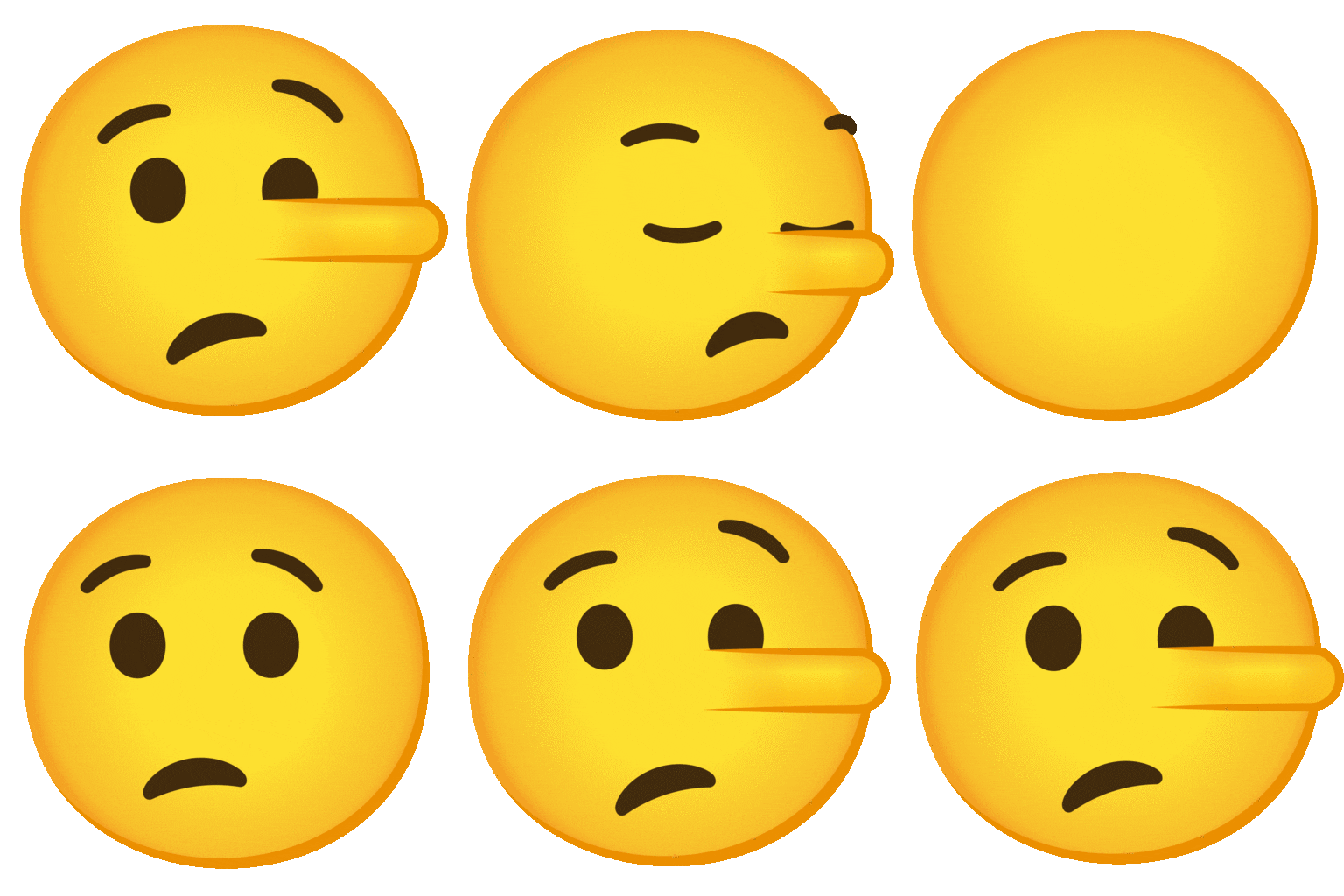
Represents deception or falsehood. It's used to call out someone who is being dishonest or to express disbelief in a statement. On some platforms like Apple it looks more like Pinocchio, making the lie more obvious.
Expresses contemplation, doubt, or skepticism. It suggests that the user is questioning the validity of the information presented. The subtle differences across platforms like Google and Samsung can affect how skeptical it appears.
Represents a critical and discerning eye. It suggests that the user is carefully examining the information and looking for inconsistencies. It implies a more intellectual approach to questioning information.
Expresses frustration, disbelief, or exasperation. It's used to react to something that is obviously false or foolish. The male version 🤦♂️ is also commonly used.
Indicates confirmation or verification. It can be used to signal that a piece of information has been fact-checked and found to be accurate. It's often paired with fact-checking websites.
Noto Animated
Apache 2.0
Noto Animated
Apache 2.0
Noto Animated
Apache 2.0
Noto Animated
Apache 2.0
Noto Animated
Apache 2.0
ℹ️ All images shown are from open-licensed sources (Apache 2.0, MIT, CC-BY 4.0, CC BY-SA 4.0) and are free to use.
Copy and share
Overusing emojis can undermine the seriousness of your message. Use them strategically to emphasize key points or add emotional context.
Different audiences may interpret emojis differently. Be mindful of cultural differences and generational gaps when using emojis to address misinformation.
Emojis can look different across platforms (Apple, Google, Samsung, Microsoft, WhatsApp). Ensure your message is clear regardless of the recipient's device.
Combining emojis can create more complex meanings. For example, 🤔📰 can represent researching news stories.
Use emojis like ✅ and ❌ to clearly indicate whether information has been verified or debunked.
This content was created with AI technology, enriched with Unicode Consortium data and community contributions. AI Disclosure →