Navigating the digital age requires a keen eye for discerning truth from falsehood. Fake news, or disinformation, has become a pervasive issue, impacting everything from political discourse to public health. This emoji guide provides a visual vocabulary for discussing, identifying, and combating the spread of misinformation. Understanding the nuances of these emojis can help you communicate more effectively and critically about the challenges of fake news in online spaces. From symbols of deception to tools for fact-checking, this collection offers a way to express your thoughts and concerns about the spread of false information in a concise and impactful way.
When using emojis to discuss fake news, consider the context and your audience. A clown face might be appropriate for satirical commentary, while a more serious emoji like the thinking face or magnifying glass might be better suited for a discussion about fact-checking and media literacy. Be mindful of how your emoji choices could be interpreted, and strive to use them in a way that promotes clarity and understanding. The goal is to contribute to a more informed and discerning online environment, where truth prevails over deception. Remember to always verify information before sharing it, and encourage others to do the same. Emojis can be a powerful tool for raising awareness and promoting critical thinking in the fight against fake news.
This guide explores emojis that represent deception, investigation, and critical thinking. It also includes emojis that can be used to express frustration or concern about the spread of misinformation. By using these emojis thoughtfully, you can contribute to a more informed and discerning online environment.
18+Emoji
8Messages
5Tips
⚡
Quick Copy
Copy most popular emojis with one click
🤥
Lying Face
🤡
Clown Face
🧐
Face with Monocle
🤔
Thinking Face
📰
Newspaper
📣
Megaphone
🚨
Police Car Light
✅
Check Mark
❌
Cross Mark
🤦♀️
Woman Facepalming
🧪 Emoji Mashups (Emoji Kitchen)
Fun mashups created by combining Fake News emojis with Emoji Kitchen. Download and use them freely.
Help grow the Fake News collection! Suggest emojis or symbols you think are missing and contribute to the community.
💡 Missing an emoji/symbol?
📖
Meaning & Usage
🤥
Lying Face
Represents dishonesty, falsehoods, or deception. Use it when discussing someone who is not telling the truth or when highlighting a piece of misinformation. On some platforms, it appears with a Pinocchio-like long nose.
🤡
Clown Face
Often used to describe someone acting foolishly or to satirize a situation. In the context of fake news, it can represent the absurdity of false claims or the people who spread them. Be mindful of potential offensiveness.
🧐
Face with Monocle
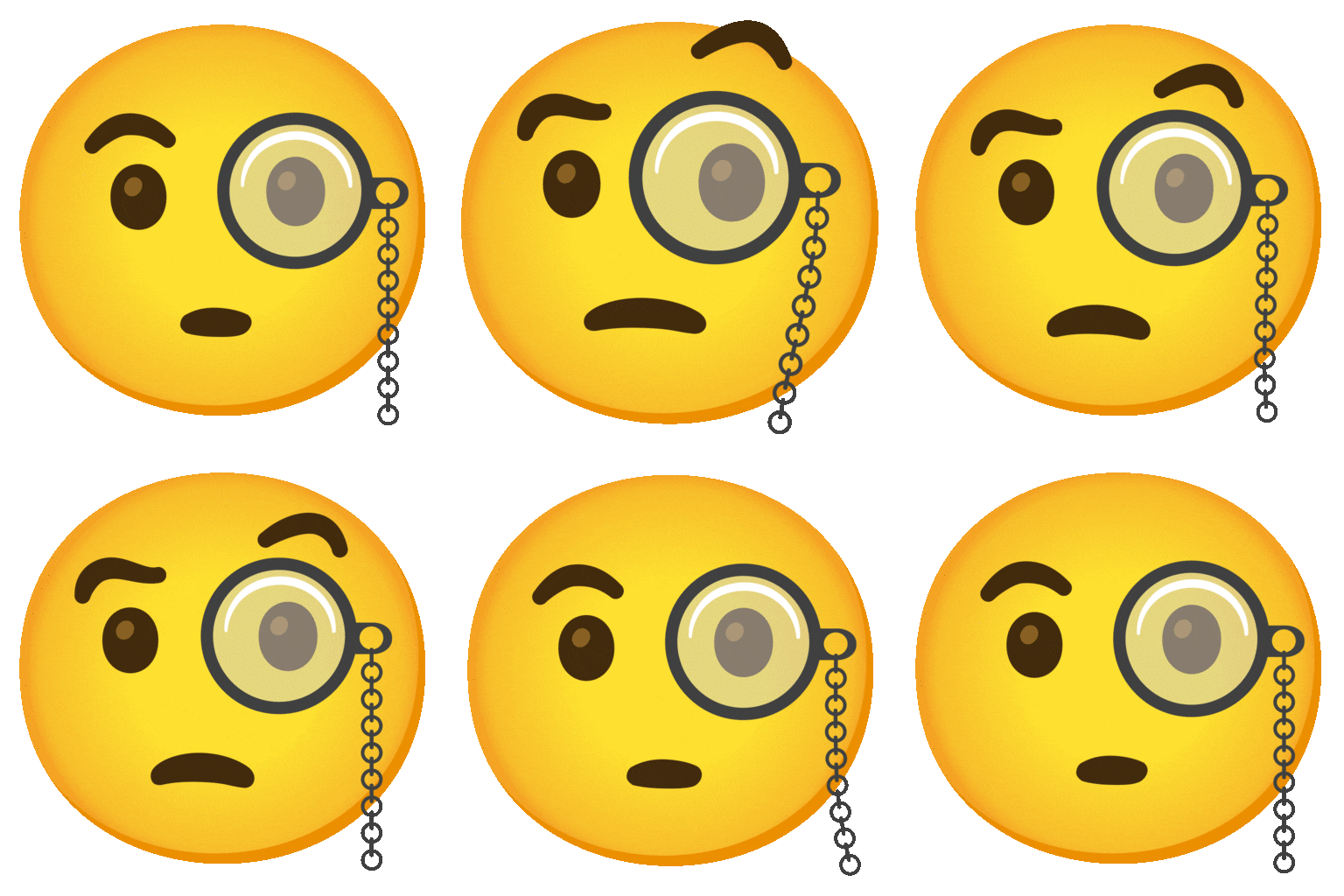
Represents skepticism, scrutiny, or investigation. Use it when questioning the validity of a claim or when emphasizing the need for critical thinking. It suggests a careful and discerning approach to information.
🤔
Thinking Face
Expresses contemplation, doubt, or uncertainty. Use it when you are unsure about the truthfulness of something or when you are encouraging others to question what they read. It's a good way to show you are thinking critically.
📰
Newspaper
Represents news, media, and journalism. Can be used to discuss the role of the media in spreading or combating fake news. It can also symbolize the importance of reliable news sources. On some platforms, it shows a specific headline.
🚨
Police Car Light
Indicates an emergency or warning. In the context of fake news, it can be used to signal a serious threat posed by misinformation or to alert others to potential scams or hoaxes. It conveys a sense of urgency.
📱
Platform Appearances
🤥 Lying Face
Google NotoApache 2.0
Twitter/XCC-BY 4.0
Noto AnimatedApache 2.0
Fluent 3DMIT
OpenMojiCC BY-SA 4.0
🤡 Clown Face
Google NotoApache 2.0
Noto AnimatedApache 2.0
Fluent 3DMIT
OpenMojiCC BY-SA 4.0
🧐 Face with Monocle
Google NotoApache 2.0
Twitter/XCC-BY 4.0
Noto AnimatedApache 2.0
Fluent 3DMIT
OpenMojiCC BY-SA 4.0
🤔 Thinking Face
Google NotoApache 2.0
Noto AnimatedApache 2.0
Fluent 3DMIT
OpenMojiCC BY-SA 4.0
📰 Newspaper
Google NotoApache 2.0
Twitter/XCC-BY 4.0
Fluent 3DMIT
OpenMojiCC BY-SA 4.0
📣 Megaphone
Google NotoApache 2.0
Twitter/XCC-BY 4.0
Noto AnimatedApache 2.0
Fluent 3DMIT
OpenMojiCC BY-SA 4.0
ℹ️ All images shown are from open-licensed sources (Apache 2.0, MIT, CC-BY 4.0, CC BY-SA 4.0) and are free to use.
💬
Ready Messages
Copy and share
Is this article real? 🤔 Seems like #fakenews 🤥
Don't believe everything you read online! 🧐 Do your research! ✅
Another day, another ridiculous conspiracy theory. 🤡 #fakenews
Fact-checking is essential! 📰 Verify your sources! ✅
This is a dangerous piece of misinformation! 🚨 #fakenews
I can't believe people are falling for this! 🤦♀️ #fakenews
Consider your audience and the platform when using emojis to discuss fake news. What might be appropriate on Twitter could be misconstrued on LinkedIn.
🎯
Avoid Misinterpretation
Be mindful of how your emoji choices could be interpreted. Use them in a way that promotes clarity and understanding, not confusion or offense.
🎯
Platform Differences
Emojis can appear differently across platforms (Apple, Google, Samsung, etc.). Test your messages to ensure they are displayed as intended.
🎯
Combine with Text
Emojis are most effective when used in conjunction with text. Provide context and explanation to avoid ambiguity.
🎯
Promote Critical Thinking
Use emojis to encourage others to question information and verify sources. Help create a more informed online environment.
🔗
Similar Combinations
Discover more emoji combinations related to Fake News