Navigating the world of prohibited items can be tricky, but emojis can help! This guide explores the use of emojis to represent items that are typically restricted or banned in certain contexts, such as airports, schools, or public spaces. Understanding the nuances of these emojis can be useful for creating clear and concise warnings, expressing disapproval, or even adding a touch of humor to conversations about rules and regulations. From weapons and drugs to flammable materials and dangerous goods, emojis offer a visual shorthand for communicating restrictions effectively. This guide will help you decipher the meanings behind these symbols and use them appropriately in your digital communications.
Emojis related to prohibited items often feature a red circle with a diagonal line through them, indicating a ban or restriction. However, the specific item depicted within the circle can vary depending on the platform and the context. For example, a cigarette emoji with a prohibition symbol indicates a no-smoking area, while a gun emoji with the same symbol signifies a gun-free zone. It's important to be aware of these variations and to choose emojis that are easily recognizable and universally understood. Furthermore, consider the audience and the tone of your message when using these emojis. While they can be effective for conveying serious warnings, they can also be used playfully to emphasize personal boundaries or humorous restrictions. This guide will equip you with the knowledge to use prohibited item emojis with confidence and clarity.
Using prohibited item emojis can also be a way to express your personal stance on certain issues. For example, sharing a cigarette emoji with a prohibition symbol can signal your support for smoke-free environments. Similarly, using a weapon emoji with the same symbol can indicate your opposition to violence. These emojis can be powerful tools for advocating for social change and raising awareness about important issues. However, it's crucial to use them responsibly and to avoid misrepresenting your views or causing offense. Always consider the potential impact of your message and ensure that it aligns with your values and beliefs. This guide will help you navigate the ethical considerations of using prohibited item emojis and empower you to use them effectively for positive communication.
16+Emoji
8Messages
5Tips
⚡
Quick Copy
Copy most popular emojis with one click
🚭
No Smoking
🚫
Prohibited
🚳
No Bicycles
🚱
Non-Potable Water
📵
No Mobile Phones
🚷
No Pedestrians
🚯
Do Not Litter
☢️
Radioactive
🧪 Emoji Mashups (Emoji Kitchen)
Fun mashups created by combining Prohibited Items emojis with Emoji Kitchen. Download and use them freely.
Help grow the Prohibited Items collection! Suggest emojis or symbols you think are missing and contribute to the community.
💡 Missing an emoji/symbol?
📖
Meaning & Usage
🚭
No Smoking Emoji
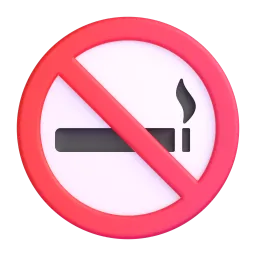
This emoji indicates that smoking is prohibited in a particular area. It typically features a cigarette with a red circle and diagonal line through it. On some platforms, the cigarette may be depicted with smoke rising from it.
🚫
Prohibited Emoji
This is a general prohibition sign, often used as a base for other prohibited item emojis. It's a red circle with a diagonal line, signifying that something is not allowed. Its appearance is consistent across platforms like Apple, Google, and Samsung.
🚳
No Bicycles Emoji
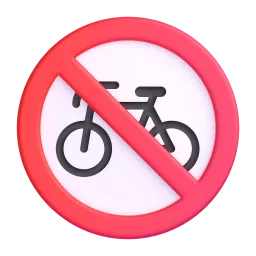
This emoji indicates that bicycles are not allowed in a specific area. It shows a bicycle within a red circle with a diagonal line. The bicycle design varies slightly across platforms, but the meaning remains the same.
📵
No Mobile Phones Emoji
This emoji signifies that the use of mobile phones is prohibited. It depicts a mobile phone with a red circle and diagonal line. It's commonly used in places like cinemas, hospitals, and libraries.
🚯
Do Not Litter Emoji
This emoji indicates that littering is not allowed. It shows a person throwing trash into a bin with a red circle and diagonal line. It's used to promote cleanliness and environmental awareness.
☢️
Radioactive Emoji
This emoji warns of radioactive materials or areas. It features the radioactive symbol, a trefoil, and is often used in contexts related to nuclear energy or hazardous waste. The design is generally consistent across platforms.
📱
Platform Appearances
🚭 No Smoking
Google NotoApache 2.0
Twitter/XCC-BY 4.0
Fluent 3DMIT
OpenMojiCC BY-SA 4.0
🚫 Prohibited
Google NotoApache 2.0
Twitter/XCC-BY 4.0
Fluent 3DMIT
OpenMojiCC BY-SA 4.0
🚳 No Bicycles
Google NotoApache 2.0
Twitter/XCC-BY 4.0
Fluent 3DMIT
OpenMojiCC BY-SA 4.0
🚱 Non-Potable Water
Google NotoApache 2.0
Twitter/XCC-BY 4.0
Fluent 3DMIT
OpenMojiCC BY-SA 4.0
📵 No Mobile Phones
Google NotoApache 2.0
Twitter/XCC-BY 4.0
Fluent 3DMIT
OpenMojiCC BY-SA 4.0
🚷 No Pedestrians
Google NotoApache 2.0
Twitter/XCC-BY 4.0
Fluent 3DMIT
OpenMojiCC BY-SA 4.0
ℹ️ All images shown are from open-licensed sources (Apache 2.0, MIT, CC-BY 4.0, CC BY-SA 4.0) and are free to use.
💬
Ready Messages
Copy and share
No smoking allowed in this area! 🚭
Please turn off your mobile phones during the performance. 📵
Littering is strictly prohibited! 🚯 Keep our city clean. ♻️
Bicycles are not permitted on this path. 🚳 Please use the designated bike lane. 🚴
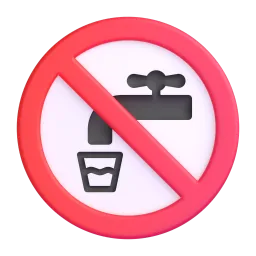
This water is non-potable. 🚱 Do not drink!
Access to this area is prohibited. 🚫 Authorized personnel only. ⚠️