Mobile app development is a complex process, and emojis can be a fun and effective way to communicate about it. Whether you're discussing coding, design, testing, or deployment, there's an emoji that can help convey your message. Using emojis in your team communication, project documentation, or even marketing materials can add personality and clarity. This guide explores the best emojis to use when talking about mobile app development, providing context and examples to help you express yourself effectively. From representing different programming languages to illustrating user interfaces, these emojis can make your conversations more engaging and easier to understand, especially in a fast-paced, digital environment where visual communication is key. Consider using them in Slack channels, project management tools, or even commit messages to add a touch of levity and clarity to your workflow. Remember to use them appropriately and avoid overusing them, as too many emojis can be distracting.
16+Emoji
8Messages
5Tips
⚡
Quick Copy
Copy most popular emojis with one click
📱
Mobile Phone
💻
Laptop
⚙️
Gear
💡
Light Bulb
✅
Check Mark
🐞
Bug
🚀
Rocket
🎨
Artist Palette
📲
Mobile with Arrow
🧪 Emoji Mashups (Emoji Kitchen)
Fun mashups created by combining Mobile App Development emojis with Emoji Kitchen. Download and use them freely.
Help grow the Mobile App Development collection! Suggest emojis or symbols you think are missing and contribute to the community.
💡 Missing an emoji/symbol?
📖
Meaning & Usage
📱
Mobile Phone
Represents the mobile device itself, the target platform for app development. Can be used to indicate the app's purpose or target audience. On Apple, it's a sleek iPhone, while on Google it's a generic smartphone.
💻
Laptop
Represents the developer's workstation or the coding environment. Can be used to indicate the development process or the tools used. The design varies across platforms, with Apple's showing a MacBook and others showing generic laptops.
⚙️
Gear
Represents settings, configuration, or the inner workings of the app. Can be used to indicate technical aspects or customization options. It's generally depicted as a single gear, but the style and color vary.
💡
Light Bulb
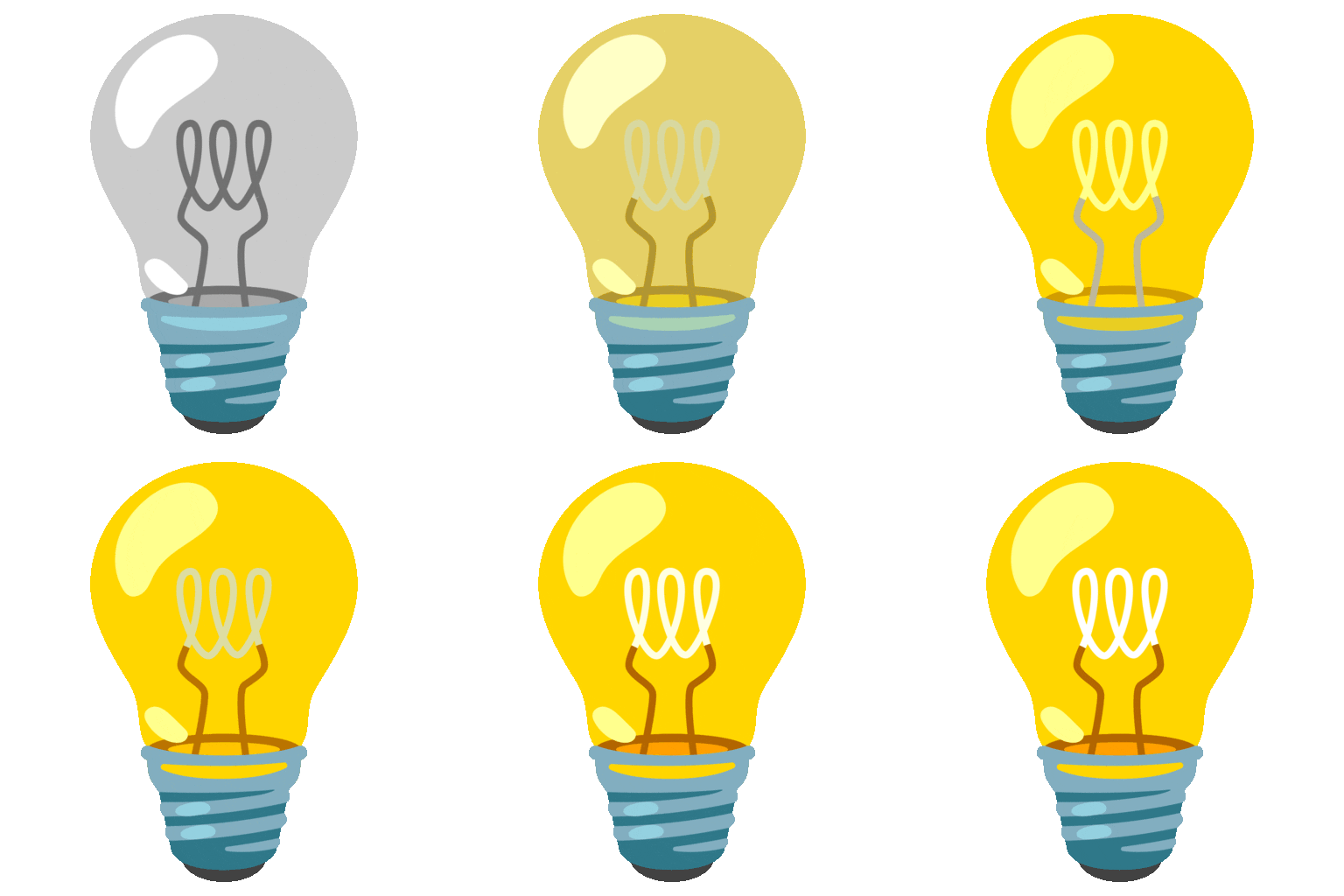
Represents ideas, innovation, or problem-solving. Can be used to indicate brainstorming sessions or new features. The bulb's design and glow vary across platforms.
✅
Check Mark
Represents successful completion, testing, or validation. Can be used to indicate that a task is done or a feature is working. The checkmark's color and style differ slightly.
🐞
Bug
Represents errors, defects, or issues in the code. Can be used to indicate debugging or troubleshooting. The bug's appearance varies significantly, from a ladybug to a generic insect.
🚀
Rocket
Represents deployment, launch, or success. Can be used to indicate the release of the app or a major update. The rocket's design and trajectory vary across platforms.
📱
Platform Appearances
📱 Mobile Phone
Google NotoApache 2.0
Twitter/XCC-BY 4.0
Fluent 3DMIT
OpenMojiCC BY-SA 4.0
💻 Laptop
Google NotoApache 2.0
Twitter/XCC-BY 4.0
Noto AnimatedApache 2.0
Fluent 3DMIT
OpenMojiCC BY-SA 4.0
⚙️ Gear
Google NotoApache 2.0
Twitter/XCC-BY 4.0
Noto AnimatedApache 2.0
OpenMojiCC BY-SA 4.0
💡 Light Bulb
Google NotoApache 2.0
Twitter/XCC-BY 4.0
Noto AnimatedApache 2.0
Fluent 3DMIT
OpenMojiCC BY-SA 4.0
✅ Check Mark
Google NotoApache 2.0
Twitter/XCC-BY 4.0
Noto AnimatedApache 2.0
Fluent 3DMIT
OpenMojiCC BY-SA 4.0
🐞 Bug
Google NotoApache 2.0
Twitter/XCC-BY 4.0
Noto AnimatedApache 2.0
Fluent 3DMIT
OpenMojiCC BY-SA 4.0
ℹ️ All images shown are from open-licensed sources (Apache 2.0, MIT, CC-BY 4.0, CC BY-SA 4.0) and are free to use.
💬
Ready Messages
Copy and share
Starting a new mobile app project! 📱💻 Let's build something amazing! ✨
Debugging session in progress... 🐞 Wish me luck! 🙏
New feature implemented and tested! ✅ Ready for the next step. 🚀
Brainstorming ideas for the UI/UX. 🎨💡 Any suggestions? 🤔
Deployment successful! 🎉 The app is now live! 📱
Need help with this error message. 💻 Anyone familiar with this? 🆘
Working on improving the app's performance. ⚙️ It's getting there! 💪
Just finished the design mockups! 🎨 What do you think? 👍👎
🎨
Related Emojis
📱
Devices
💻
Tools
🐛
Bugs
🎨
Design
🚀
Deployment
✅
Testing
💡
Ideas
💡
Usage Tips
🎯
Use Contextually
Ensure the emoji's meaning is clear within the context of your message. Avoid using emojis that could be misinterpreted.
🎯
Platform Consistency
Be aware that emojis can look different across platforms (Apple, Google, Samsung, etc.). Test how your messages appear on different devices.
🎯
Avoid Overuse
Too many emojis can be distracting. Use them sparingly to enhance your message, not to overwhelm it.
🎯
Accessibility
Consider users with screen readers. Emojis should not replace important information; always provide alternative text.
🎯
Team Culture
Establish a team culture around emoji usage. Define which emojis are appropriate for different types of communication.
🔗
Similar Combinations
Discover more emoji combinations related to Mobile App Development