🫶
Heart Hands
The heart hands emoji can represent care, love, and support. It can be used to show solidarity with the Deaf community and express appreciation for sign language.
Communicating about deafness and accessibility through emojis can be a powerful way to raise awareness and promote inclusivity. While there isn't a single emoji that directly translates to "deaf," we can use a combination of symbols and gestures to represent the concept. Emojis related to sign language, hearing aids, and general communication are all helpful in this context. It's important to use these emojis thoughtfully and respectfully, keeping in mind the diverse experiences within the Deaf community. Consider using emojis to indicate the presence of captions or sign language interpretation in videos or events. You can also use them to express support for Deaf individuals and advocate for accessibility in various settings. When using emojis to discuss deafness, consider the context and audience. Some emojis might be more appropriate in informal settings, while others are better suited for professional communication. For instance, the "speaking head" emoji can be used to indicate that someone is speaking, which might be relevant in discussions about communication access. The "ear" emoji can be used to represent hearing, and its crossed-out version can symbolize hearing loss. Remember that emojis are just one tool for communication, and they should be used in conjunction with clear and respectful language. By using emojis thoughtfully and in combination with other communication methods, we can promote greater understanding and inclusion for Deaf individuals.
Copy most popular emojis with one click
Fun mashups created by combining Deaf emojis with Emoji Kitchen. Download and use them freely.

Help grow the Deaf collection! Suggest emojis or symbols you think are missing and contribute to the community.
💡 Missing an emoji/symbol?
The heart hands emoji can represent care, love, and support. It can be used to show solidarity with the Deaf community and express appreciation for sign language.
This emoji represents the ILY sign in American Sign Language (ASL). It's a direct representation of a sign and can be used to communicate affection and connection within the Deaf community and beyond. Note that on some platforms (like older Samsung versions), it may appear as a rock-on gesture.
The ear emoji can represent hearing or the act of listening. It can be used in conjunction with other emojis to discuss hearing loss or accessibility. On different platforms, the ear's appearance varies slightly, but its meaning remains consistent.
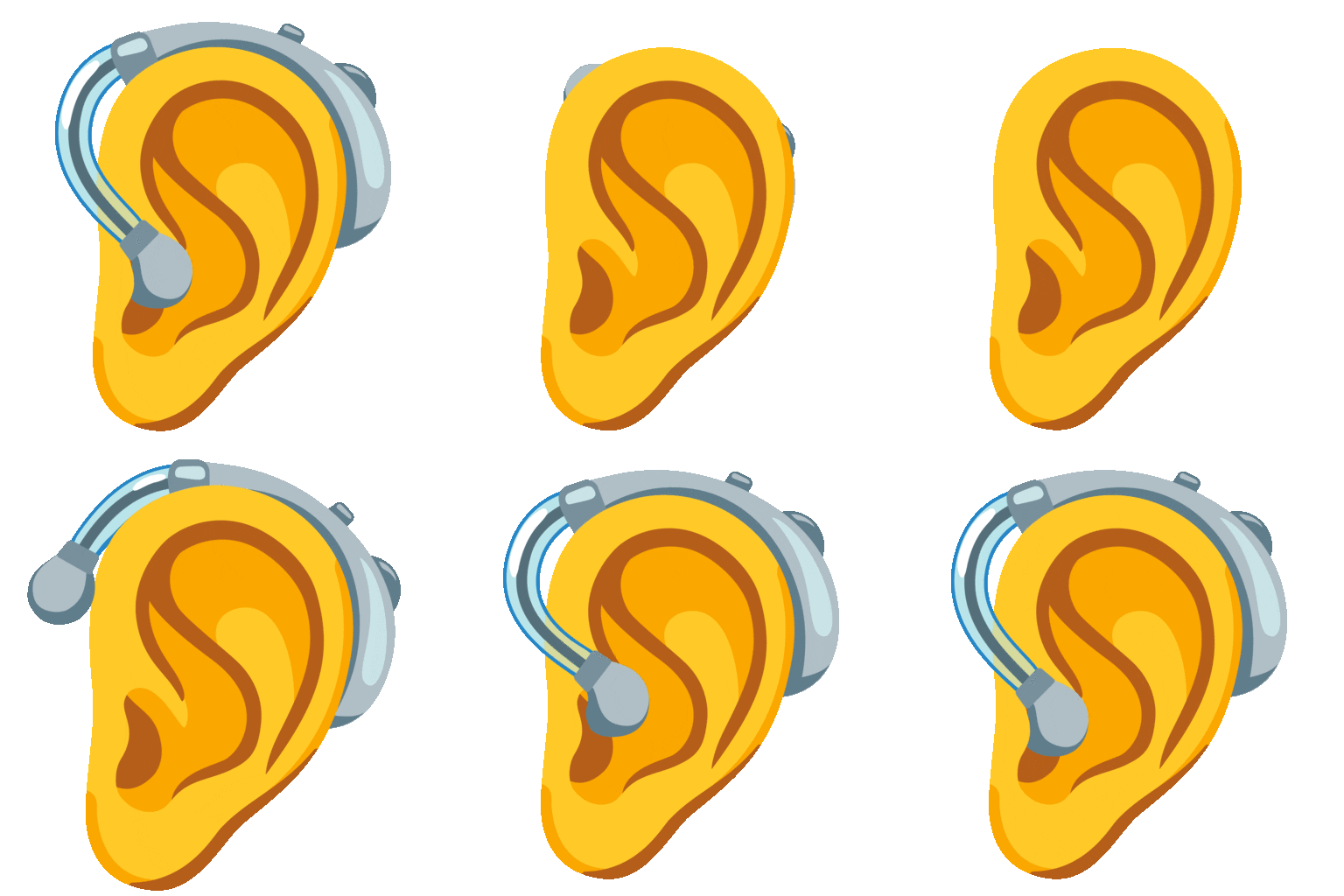
This emoji directly represents a hearing aid. It's a clear and unambiguous way to indicate the presence of hearing aids or to discuss hearing assistance technology. Its appearance is generally consistent across platforms.
This emoji can be used to indicate that someone is speaking or presenting. It can be relevant in discussions about communication access, such as the availability of captions or sign language interpretation. The appearance is consistent across platforms.
The speech balloon emoji represents communication and conversation. It can be used to indicate the importance of clear communication and accessibility in various settings. The style of the balloon varies across platforms.


 Noto Animated
Apache 2.0
Noto Animated
Apache 2.0



 Noto Animated
Apache 2.0
Noto Animated
Apache 2.0


 Noto Animated
Apache 2.0
Noto Animated
Apache 2.0


 Noto Animated
Apache 2.0
Noto Animated
Apache 2.0


 Noto Animated
Apache 2.0
Noto Animated
Apache 2.0


 Noto Animated
Apache 2.0
Noto Animated
Apache 2.0


ℹ️ All images shown are from open-licensed sources (Apache 2.0, MIT, CC-BY 4.0, CC BY-SA 4.0) and are free to use.
Copy and share
Consider your audience and the context of your message when using emojis related to deafness. Some emojis may be more appropriate in informal settings than in professional communication.
Combine emojis to create more nuanced and specific messages. For example, use the "speaking head" emoji with the "speech balloon" emoji to emphasize the importance of communication.
Use emojis to advocate for accessibility in various settings. For example, use the "information" emoji to indicate the availability of captions or sign language interpretation.
Always use emojis related to deafness respectfully and thoughtfully. Avoid using them in a way that could be considered offensive or insensitive.
Be aware that emojis can appear differently on different platforms (Apple, Google, Samsung, etc.). Check how your emojis look on various devices to ensure your message is clear.
This content was created with AI technology, enriched with Unicode Consortium data and community contributions. AI Disclosure →