👂
Ear
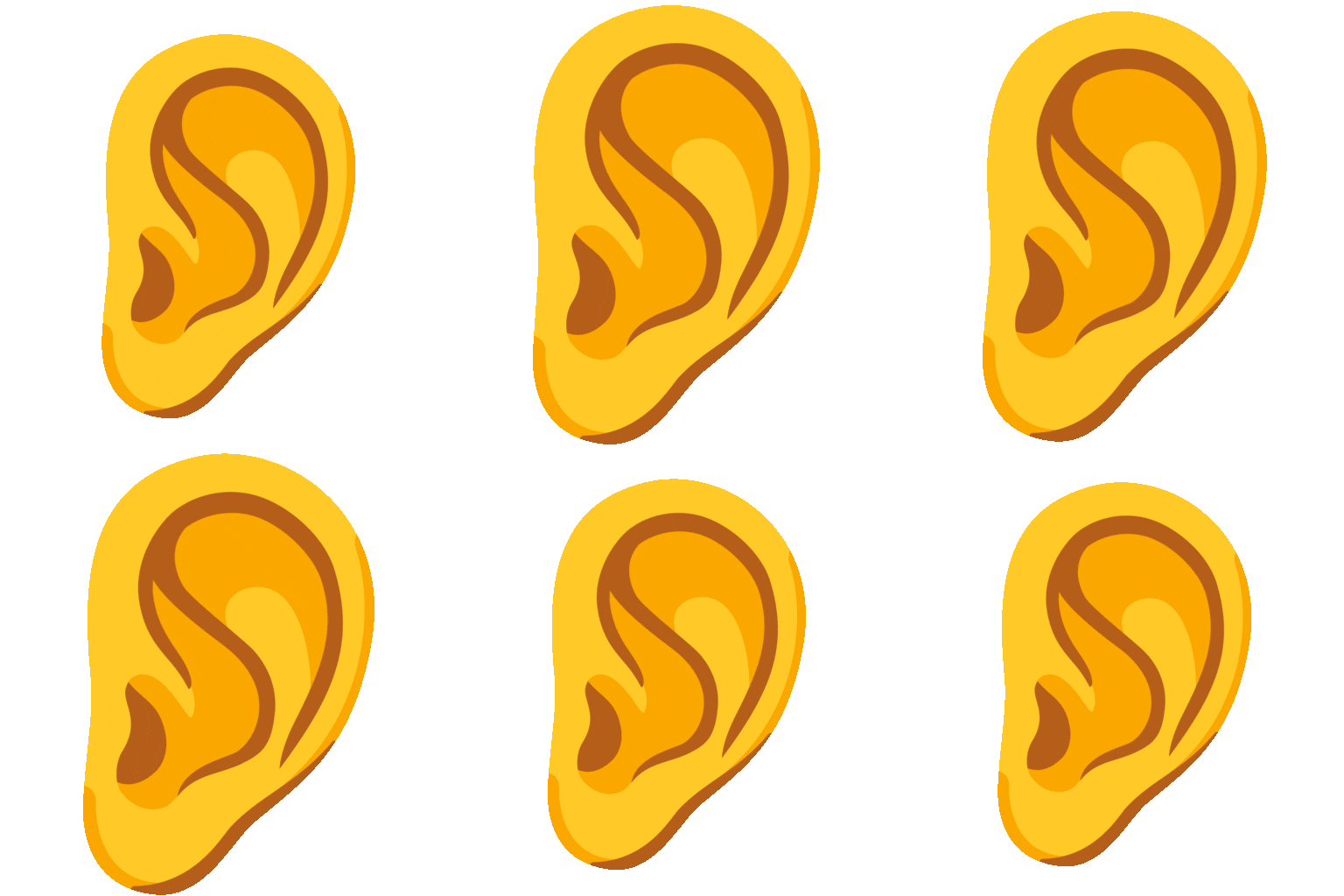
Represents listening and paying attention. Can be used to indicate that you are all ears or actively listening to someone. On some platforms, the ear has different skin tone variations.
Active listening is a crucial communication skill involving focused attention, understanding, and responding thoughtfully to the speaker. It's about more than just hearing words; it's about grasping the speaker's emotions and perspective. In the digital world, conveying active listening through emojis can be challenging but effective. Choosing the right emoji can show empathy, understanding, and engagement in a conversation. This guide explores the best emojis to use when you want to demonstrate that you're actively listening, along with tips on how to use them appropriately in different contexts. Using emojis to show active listening involves selecting those that represent understanding, empathy, and encouragement. For example, emojis that show attentiveness, like the thinking face or eyes emoji, can signal that you're carefully considering what someone is saying. Emojis that express empathy, such as the hugging face or pleading face, can convey that you understand and share the speaker's feelings. It's important to use these emojis judiciously and in context to avoid misinterpretation. Overuse or inappropriate use can come across as insincere or dismissive. Consider the relationship you have with the speaker and the tone of the conversation when selecting emojis to ensure your message is received as intended. Ultimately, the goal is to enhance communication and build stronger connections through thoughtful and empathetic digital interactions. Cultural context also plays a significant role in emoji interpretation. What might be perceived as supportive in one culture could be seen as intrusive in another. For example, overly expressive emojis might be considered unprofessional in some formal settings. Therefore, it's essential to be mindful of cultural norms and adjust your emoji usage accordingly. In professional communication, it's often best to stick to neutral or subtly positive emojis to avoid any potential misunderstandings. In personal conversations, you have more freedom to use a wider range of emojis to express your emotions and engagement. By understanding these nuances, you can effectively use emojis to enhance your active listening skills and foster better communication in various settings.
Copy most popular emojis with one click
Fun mashups created by combining Active Listening emojis with Emoji Kitchen. Download and use them freely.



Help grow the Active Listening collection! Suggest emojis or symbols you think are missing and contribute to the community.
💡 Missing an emoji/symbol?
Represents listening and paying attention. Can be used to indicate that you are all ears or actively listening to someone. On some platforms, the ear has different skin tone variations.
Shows that you are considering what someone is saying. It conveys thoughtfulness and reflection. The expression varies slightly across platforms like Apple, Google, and Samsung, but the core meaning remains consistent.
Can mean 'thank you' or 'please,' but in the context of active listening, it can express understanding and respect for the speaker's perspective. It's often used to show support or agreement. On WhatsApp, it is commonly used as a sign of gratitude.
Expresses empathy and understanding, especially when someone is sharing something difficult. It can show that you feel for them and are listening with compassion. The large, teary eyes are consistent across most platforms.
Indicates agreement and understanding. It's a quick way to acknowledge that you've heard and understood what someone has said. The design is fairly standard across platforms.
Shows strong agreement and support. It conveys that you completely understand and agree with the speaker's point. Often used to emphasize a point. The design is consistent across platforms.
Represents agreement, partnership, and understanding. In the context of active listening, it can symbolize a mutual understanding and connection. The appearance varies slightly across platforms.


 Noto Animated
Apache 2.0
Noto Animated
Apache 2.0


 Noto Animated
Apache 2.0
Noto Animated
Apache 2.0



 Noto Animated
Apache 2.0
Noto Animated
Apache 2.0



 Noto Animated
Apache 2.0
Noto Animated
Apache 2.0



 Noto Animated
Apache 2.0
Noto Animated
Apache 2.0



 Noto Animated
Apache 2.0
Noto Animated
Apache 2.0


ℹ️ All images shown are from open-licensed sources (Apache 2.0, MIT, CC-BY 4.0, CC BY-SA 4.0) and are free to use.
Copy and share
Don't overuse emojis. A few well-placed emojis are more effective than a barrage of them. Overuse can make you seem insincere.
The appropriateness of emojis depends on the context. In formal settings, stick to neutral emojis. In personal conversations, you have more freedom.
Be mindful of cultural differences in emoji interpretation. What's acceptable in one culture might be offensive in another. Tailor your emoji use to your audience.
Be aware that emojis can look different across platforms (Apple, Google, Samsung, etc.). Test how your emojis appear on different devices to avoid miscommunication.
Emojis should complement your text, not replace it. Use them to enhance your message and add emotional nuance, but always provide clear and concise text as well.
This content was created with AI technology, enriched with Unicode Consortium data and community contributions. AI Disclosure →