🌧️
Cloud with Rain Emoji
Represents rainy weather. It's commonly used to express sadness, gloom, or a desire to stay indoors. On some platforms, the raindrops are more pronounced than others.
Navigating the digital world often requires expressing more than just words, especially when discussing the weather. Bad weather emojis offer a quick and universally understood way to convey feelings about unpleasant atmospheric conditions. From rain and storms to snow and fog, these emojis add nuance to our digital conversations, social media posts, and weather forecasts. Understanding the subtle differences in how these emojis appear across various platforms (Apple, Google, Samsung, Microsoft, WhatsApp) is key to ensuring your message is accurately received. For example, a simple cloud emoji might look fluffy and benign on one platform, while appearing darker and more ominous on another. This guide explores the meanings, usage, and cultural context of bad weather emojis, helping you communicate effectively, no matter the forecast.
Copy most popular emojis with one click
Fun mashups created by combining Bad Weather emojis with Emoji Kitchen. Download and use them freely.


Help grow the Bad Weather collection! Suggest emojis or symbols you think are missing and contribute to the community.
💡 Missing an emoji/symbol?
Represents rainy weather. It's commonly used to express sadness, gloom, or a desire to stay indoors. On some platforms, the raindrops are more pronounced than others.
Signifies a thunderstorm. This emoji can convey danger, excitement, or a dramatic situation. The intensity of the lightning bolt varies across platforms, with some showing a single, jagged bolt and others displaying multiple flashes.
Represents snowy weather. It's often used during winter months or to express a love for snow. The number and size of snowflakes can differ, with some platforms showing delicate, intricate designs while others opt for simpler shapes.
Represents protection from the rain. It can also symbolize preparedness or caution. Some platforms display the umbrella open and upright, while others show it tilted to one side as if being held against the wind.
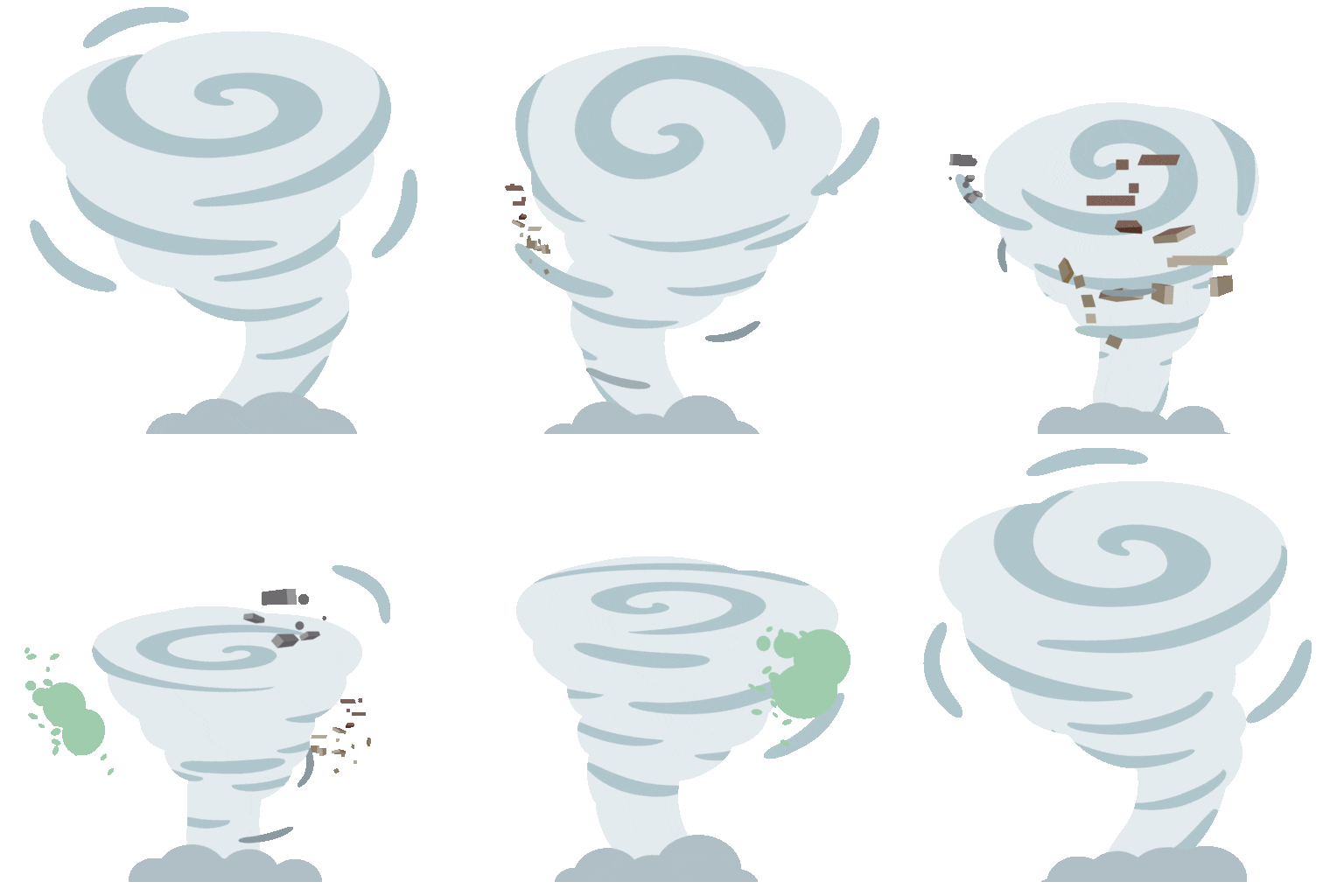
Represents a tornado or a turbulent situation. It can convey chaos, destruction, or a sense of being overwhelmed. The visual representation of the tornado varies, with some showing a swirling vortex and others depicting a more abstract, funnel-shaped cloud.
Represents feeling extremely cold. It's often used in conjunction with weather emojis to emphasize the frigid temperatures. The face typically has icicles or a frozen expression.


 Noto Animated
Apache 2.0
Noto Animated
Apache 2.0


 Noto Animated
Apache 2.0
Noto Animated
Apache 2.0





 Noto Animated
Apache 2.0
Noto Animated
Apache 2.0

ℹ️ All images shown are from open-licensed sources (Apache 2.0, MIT, CC-BY 4.0, CC BY-SA 4.0) and are free to use.
Copy and share
Be aware that weather emojis can look different across platforms. Test your messages on different devices to ensure the intended meaning is clear.
Use multiple weather emojis together to emphasize the severity of the weather. For example, use several rain emojis (🌧️🌧️🌧️) to indicate heavy rain.
Consider the context of your message when using weather emojis. A storm emoji (⛈️) might be appropriate for a weather forecast but could be misinterpreted in a casual conversation.
Combine weather emojis with location emojis (e.g., 📍) to provide specific weather updates for a particular area.
Remember that some people may not be able to see emojis. Always provide alternative text descriptions for important weather information.
This content was created with AI technology, enriched with Unicode Consortium data and community contributions. AI Disclosure →