Light Bulb
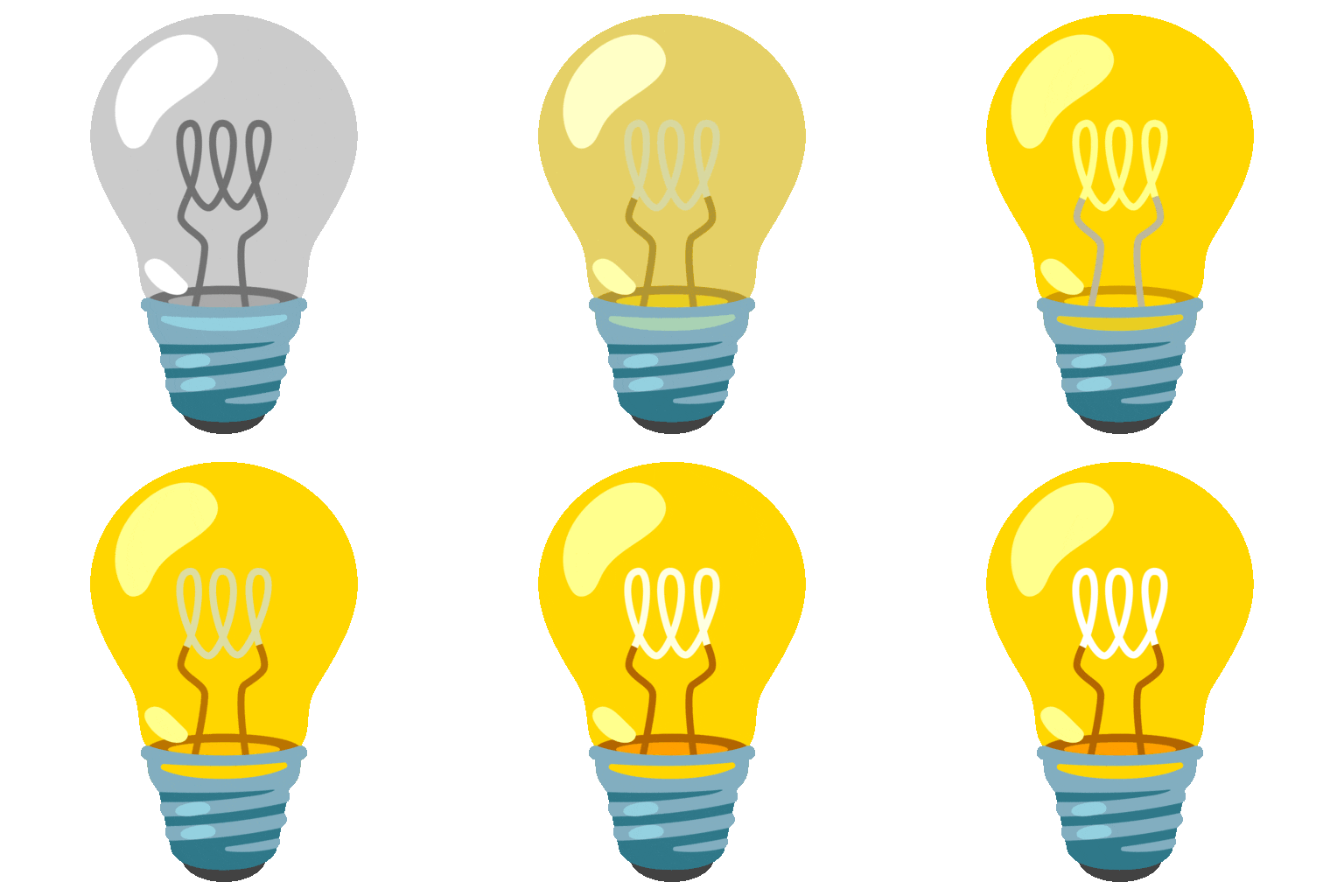
Represents an idea, concept, or brainstorming session. Use it to indicate the initial phase of prototyping where ideas are generated. Across platforms, the design is consistent, though the bulb's shape and glow may vary slightly.
Prototyping is the process of creating early samples, models, or releases of a product built to test a concept or process. It's a crucial step in product development, allowing designers and engineers to identify and address potential issues before investing significant resources into full-scale production. Emojis can be used to visually represent the different stages of prototyping, from initial brainstorming and design to testing and refinement. They can also convey emotions associated with the process, such as excitement, frustration, and satisfaction. This guide explores the best emojis to use when discussing prototyping, offering insights into their meanings and practical applications in digital communication. Whether you're a designer, engineer, or simply interested in the product development process, this emoji guide will help you communicate your ideas more effectively and engagingly.
Copy most popular emojis with one click
Fun mashups created by combining Prototyping emojis with Emoji Kitchen. Download and use them freely.
Help grow the Prototyping collection! Suggest emojis or symbols you think are missing and contribute to the community.
💡 Missing an emoji/symbol?
Represents an idea, concept, or brainstorming session. Use it to indicate the initial phase of prototyping where ideas are generated. Across platforms, the design is consistent, though the bulb's shape and glow may vary slightly.
Symbolizes sketching, drawing, and designing. It signifies the creation of initial drafts and blueprints during the prototyping process. The pencil's angle and style change slightly across platforms like Apple, Google, and Samsung.
Represents precision, measurement, and technical design. Use it to highlight the importance of accuracy and detail in the prototyping phase. The ruler's color and orientation are generally consistent across platforms.
Indicates building, constructing, and assembling. It represents the hands-on aspect of prototyping where physical models are created. The style and color of the tools vary across platforms, with some showing more detail than others.
Represents experimentation, testing, and analysis. Use it to signify the phase where prototypes are tested and evaluated. The liquid color inside the test tube might differ slightly between platforms.
Conveys contemplation, problem-solving, and critical thinking. It represents the mental effort involved in refining and improving the prototype. The facial expression varies slightly across platforms, affecting the perceived intensity of thought.
Symbolizes approval, completion, and validation. Use it to indicate that a prototype has met the required standards and is ready for the next stage. The check mark's color and style are consistent across most platforms.
Noto Animated
Apache 2.0
Noto Animated
Apache 2.0
Noto Animated
Apache 2.0
Noto Animated
Apache 2.0
ℹ️ All images shown are from open-licensed sources (Apache 2.0, MIT, CC-BY 4.0, CC BY-SA 4.0) and are free to use.
Copy and share
Choose emojis that accurately reflect the specific stage or aspect of prototyping you're discussing. Avoid using emojis randomly; ensure they add meaning and clarity to your message.
Be aware that emojis can appear differently across platforms (Apple, Google, Samsung, etc.). Test how your messages look on different devices to ensure the emojis are conveying the intended meaning.
Combine multiple emojis to create more complex and nuanced representations of prototyping concepts. For example, use 💡 + ✏️ to represent the initial design phase.
While emojis can enhance communication, avoid using too many in a single message. Overcrowding can make your message difficult to read and understand.
Tailor your emoji usage to your audience. If you're communicating with a technical team, you can use more specialized emojis. If you're communicating with a broader audience, use more general and easily understandable emojis.
This content was created with AI technology, enriched with Unicode Consortium data and community contributions. AI Disclosure →