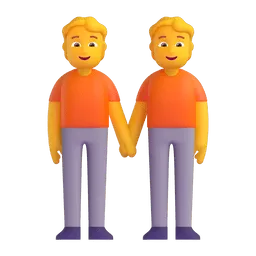
Political economy is a complex field that studies the interplay between economic and political systems. It explores how political institutions, ideologies, and power dynamics influence economic outcomes, and conversely, how economic forces shape political processes. Since political economy encompasses such broad themes, representing it with emojis requires abstract thinking. Emojis can be used to symbolize concepts like wealth, poverty, governance, labor, and global trade. The key is to combine emojis in ways that convey the interconnectedness of these elements. For example, using the 🏛️ (Classical Building) to represent government alongside 💰 (Money Bag) can illustrate the relationship between political institutions and economic resources. Similarly, 🧑🤝🧑 (People Holding Hands) can symbolize cooperation and social structures within an economy. When communicating about political economy, consider your audience and the specific aspect you want to highlight. A message about income inequality might use ⬆️ (Up Arrow) and ⬇️ (Down Arrow) alongside 🧑🤝🧑 to show the disparity in economic progress. Remember that emojis are open to interpretation, so clarity and context are crucial.
16+Emoji
8Messages
5Tips
⚡
Quick Copy
Copy most popular emojis with one click
🏛️
Classical Building
💰
Money Bag
⚖️
Balance Scale
📈
Chart Increasing
📉
Chart Decreasing
🧑🤝🧑
People Holding Hands
🏭
Factory
🌍
Globe Showing Europe-Africa
🧪 Emoji Mashups (Emoji Kitchen)
Fun mashups created by combining Political Economy emojis with Emoji Kitchen. Download and use them freely.
Help grow the Political Economy collection! Suggest emojis or symbols you think are missing and contribute to the community.
💡 Missing an emoji/symbol?
📖
Meaning & Usage
🏛️
Classical Building
Represents government, political institutions, and governance. Can be used to symbolize policy decisions and regulatory frameworks. On some platforms, it may appear as a generic building, so context is important.
💰
Money Bag
Represents wealth, capital, and financial resources. Can be used to symbolize economic power and the distribution of wealth. Its appearance is consistent across most platforms.
⚖️
Balance Scale
Represents justice, fairness, and equality. In the context of political economy, it can symbolize equitable distribution of resources and fair trade practices. The design varies slightly across platforms.
📈
Chart Increasing
Represents economic growth, progress, and positive trends. Can be used to illustrate rising GDP, increasing employment rates, or growing markets. Appears similarly across platforms.
📉
Chart Decreasing
Represents economic decline, recession, and negative trends. Can be used to illustrate falling GDP, unemployment, or market downturns. Appears similarly across platforms.
🧑🤝🧑
People Holding Hands
Represents social structures, cooperation, and community. In political economy, it can symbolize labor unions, social movements, and collective action. The appearance varies slightly across platforms.
📱
Platform Appearances
🏛️ Classical Building
Google NotoApache 2.0
Twitter/XCC-BY 4.0
OpenMojiCC BY-SA 4.0
💰 Money Bag
Google NotoApache 2.0
Twitter/XCC-BY 4.0
Fluent 3DMIT
OpenMojiCC BY-SA 4.0
⚖️ Balance Scale
Google NotoApache 2.0
Twitter/XCC-BY 4.0
Noto AnimatedApache 2.0
OpenMojiCC BY-SA 4.0
📈 Chart Increasing
Google NotoApache 2.0
Twitter/XCC-BY 4.0
Noto AnimatedApache 2.0
Fluent 3DMIT
OpenMojiCC BY-SA 4.0
📉 Chart Decreasing
Google NotoApache 2.0
Twitter/XCC-BY 4.0
Noto AnimatedApache 2.0
Fluent 3DMIT
OpenMojiCC BY-SA 4.0
🧑🤝🧑 People Holding Hands
Google NotoApache 2.0
Twitter/XCC-BY 4.0
Fluent 3DMIT
OpenMojiCC BY-SA 4.0
ℹ️ All images shown are from open-licensed sources (Apache 2.0, MIT, CC-BY 4.0, CC BY-SA 4.0) and are free to use.
💬
Ready Messages
Copy and share
Analyzing the latest economic indicators 📈📉. What are your thoughts? 🤔
Debating the role of government in the economy 🏛️💰. It's a complex issue! 🤯
Discussing income inequality ⬆️⬇️ and potential solutions. ⚖️
The impact of globalization on local economies 🌍🏭. What are the challenges and opportunities? 🧐
Exploring different economic models and their implications. 🤓
The future of work in the age of automation 🤖🏭. Exciting and concerning! 😬
Analyzing the impact of trade policies on global markets 🚢🌍. Complex stuff! 🤯
The role of innovation in driving economic growth 💡📈. Let's discuss! 🗣️
🎨
Related Emojis
💰
Finance
🏛️
Government
🏭
Industry
🌍
Globalization
⚖️
Justice
🧑🤝🧑
Society
📈
Growth
🤖
Technology
💡
Usage Tips
🎯
Context is Key
Political economy emojis are abstract. Always provide context to ensure your message is clear. Use surrounding text to explain the meaning of the emojis.
🎯
Platform Variations
Be aware that emojis can look different across platforms (Apple, Google, Samsung, etc.). Test your messages on different devices to ensure they are interpreted as intended.
🎯
Combine Emojis
Combine multiple emojis to create more nuanced meanings. For example, 🏛️ + 💰 can represent government spending or economic policy.
🎯
Use Sparingly
Don't overuse emojis. A few well-chosen emojis can enhance your message, but too many can make it confusing and unprofessional.
🎯
Consider Your Audience
Think about your audience's familiarity with political economy concepts. Use simpler emojis for a general audience and more complex combinations for those with expertise.
🔗
Similar Combinations
Discover more emoji combinations related to Political Economy